

Review
MicroConf: Two Bootstrappers Share Their Story & Review (Updated 2026)
From founders who've been there 7+ times. Learn what MicroConf is really like, who should attend, and how to get the most out of it.
We've been to MicroConf a combined 7+ times between the two of us. Mac's been six times and is heading to his seventh. Alex went for the first time in 2024 and is hooked—he's heading back to Portland in April 2026 and Iceland in September. Here's everything we've learned about whether MicroConf is worth it, what to expect, and how to get the most out of it.
What is MicroConf?
MicroConf is the premier conference for bootstrapped SaaS founders. Founded in 2011 by Rob Walling and Mike Taber, it started as a small gathering of entrepreneurs who were building software companies without outside funding. The conference has since grown into multiple events held across the US and Europe, but it's maintained its intimate, founder-focused atmosphere.
Unlike massive tech conferences with thousands of attendees and corporate sponsors dominating the stage, MicroConf is intentionally kept small—typically 200-350 attendees. This size is deliberate: it's large enough to meet diverse, interesting founders, but small enough that you can have meaningful conversations and build real relationships.
There are several MicroConf formats:
- MicroConf Growth - For founders doing $500K+ ARR who are scaling their teams and operations
- MicroConf Starter - For founders in the earlier stages, typically pre-$500K ARR
- MicroConf Europe - Held in various European cities for the international community
- MicroConf Remote - Virtual events for those who can't attend in person
The conference philosophy is simple: bring together operators—people actively building and growing SaaS businesses—in an environment where they can learn from each other's real experiences. No vendors pitching products. No theoretical advice from people who haven't done it. Just founders sharing what's actually working in their businesses.
The MicroConf Ecosystem: Beyond the conferences themselves, Rob Walling and team have built an entire ecosystem to support bootstrap founders. This includes TinySeed, the first accelerator designed specifically for early-stage SaaS companies looking to grow without traditional VC funding. TinySeed invests $120K-$500K for 8-15% equity and provides mentorship, community, and resources—basically the infrastructure VCs provide but tailored for founders who want to build sustainable, profitable businesses rather than chase unicorn exits. Many TinySeed founders attend MicroConf, adding another layer of high-quality operators to the attendee mix.
Our MicroConf Story
Mac attended his first MicroConf back in 2018 when he was running his previous SaaS company. He'd been following Rob Walling and the Startups For The Rest of Us podcast for years and finally decided to make the trip to Las Vegas for MicroConf Growth.
What struck Mac immediately was the quality of conversations. Within the first hour, he was discussing retention strategies with a founder doing $3M ARR, pricing models with someone who'd just sold their company, and acquisition channels with a founder who'd bootstrapped to $10M ARR. These weren't surface-level conference small talk—these were detailed, tactical conversations with people in the trenches.
Mac came back every year after that. The connections he made at MicroConf led to mastermind groups, partnership opportunities, and friendships that have been invaluable as he's built Wildfront. Several of the founders in our network today are people Mac met at MicroConf.
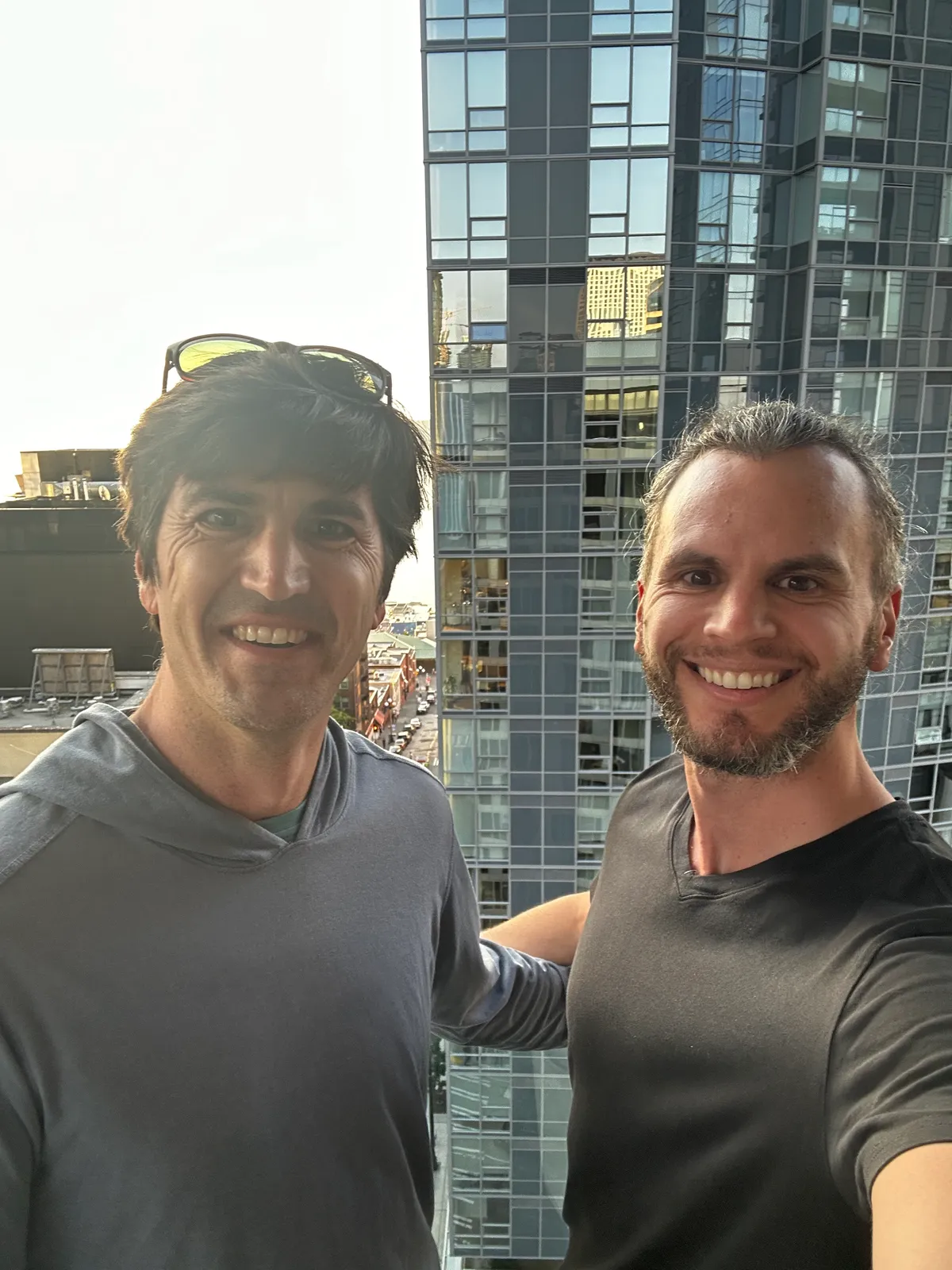
Alex and Mac, co-founders of Wildfront
Alex attended his first MicroConf in 2024 in Atlanta, somewhat skeptically. He'd been to plenty of conferences before, and many felt like a waste of time—too much networking theater, not enough substance. But Mac kept insisting it was different, so Alex gave it a shot.
Within the first day, Alex got it. The conversations were immediately deeper than typical conference chat. People were surprisingly open about their revenue, their challenges, and what was working in their businesses. Nobody was posturing or just there to pitch their product like LinkedIn is so full of these days, everyone was just scruffy and scrappy and doing their best to grow profitably.
We're both going back in 2026. Mac will be heading to Portland in April for MicroConf Growth (making it his 7th conference), and we're both planning to attend the September event in Iceland. The fact that we keep coming back—and that we're willing to travel internationally for it—says a lot about the value we get from MicroConf.
Who Attends MicroConf?
The attendee profile at MicroConf is what makes the conference special. These aren't aspiring entrepreneurs or conference tourists—they're operators actively building and growing software businesses.
Typical attendee profile:
- Founder or co-founder of a bootstrapped or mostly-bootstrapped SaaS company
- Currently generating revenue (usually $50K+ ARR for Starter, $500K+ for Growth)
- Small team or solo (many have 0-10 employees)
- Building in niches rather than trying to be the next Salesforce
- Focused on profitability and sustainable growth rather than hockey-stick VC metrics
The geographic diversity has grown over the years. While MicroConf started as primarily a US conference, we've met founders from Australia, South Africa, Europe, Asia, and South America. The bootstrap philosophy transcends borders.
One of the things we appreciate most is the operator density. At most tech conferences, you run into a lot of people who want to start a company someday, or who work at companies but aren't decision-makers, or who are there to sell you something. At MicroConf, nearly everyone is a founder actively running their business. This means conversations cut to the chase quickly—people understand the context and can relate to the challenges you're facing.
We've noticed certain verticals are well-represented: developer tools, marketing SaaS, ecommerce tools, and productized services turned into software. But there's also a surprising diversity of niches—we've met founders building software for veterinarians, construction companies, auto repair shops, and countless other specialized markets.
The revenue ranges vary widely. But the beautiful thing is that at both events, the conversations are valuable regardless of where you are on that spectrum. Someone at $100K ARR can learn from someone at $5M ARR, but they can also share insights that are valuable to someone at $20K ARR.
Conference Structure & Format
MicroConf typically runs for three days, usually starting on a Thursday and ending Saturday. The format is fairly consistent across events, though specifics vary.
A typical day looks like this:
- Morning (8:30 AM - 12:00 PM): Main stage talks (usually 3-4 sessions)
- Lunch (12:00 PM - 1:30 PM): Catered lunch with open networking
- Afternoon (1:30 PM - 5:00 PM): More talks, sometimes workshops or breakout sessions
- Evening: Organized social events, dinners, or informal gatherings
The talks themselves are different from what you'd see at a typical tech conference. Speakers are required to share actual numbers and real case studies. You won't see a talk titled "How to scale your SaaS" with generic platitudes. Instead, you'll see "How we grew from $400K to $2M ARR by rebuilding our onboarding flow—here's the exact funnel metrics and what we learned."
Here's a perfect example of the quality and tactical nature of MicroConf talks. Anthony Pierri's presentation on B2B SaaS positioning breaks down exactly how to communicate what your product does in a way that converts visitors:
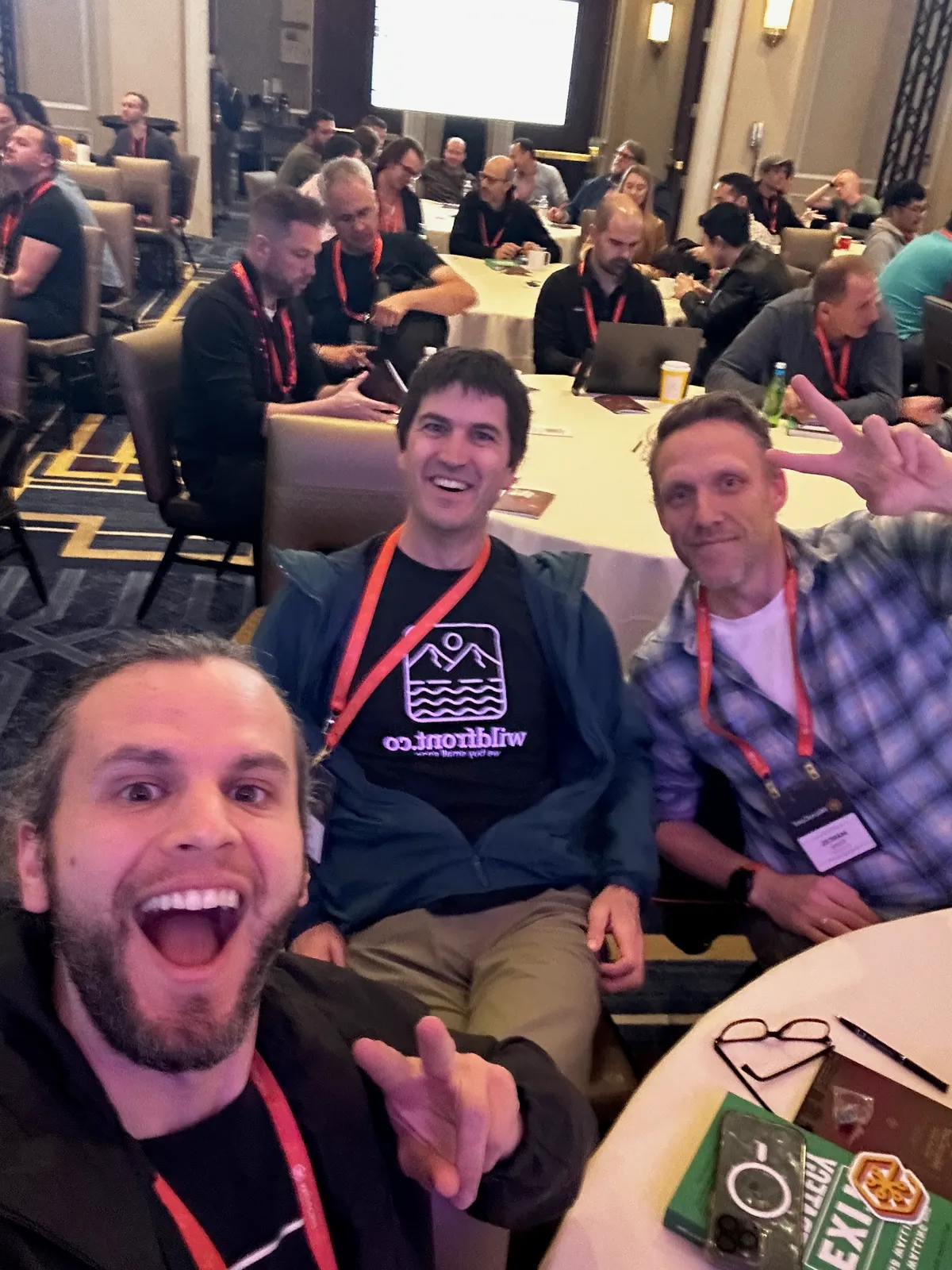
Meeting up with old friends who love to hang and bootstrap SaaS!
Talk topics typically cover:
- Acquisition channels (SEO, content, paid ads, partnerships)
- Pricing and monetization strategies
- Product-led growth tactics
- Scaling operations and building teams
- Mental health and founder wellbeing
- Exit strategies and M&A experiences
Some conferences also include attendee talks—short 5-15 minute presentations from attendees who want to share something they're working on or have learned. These are hit-or-miss but can be surprisingly valuable, and they're a great way to identify interesting people to talk to later.
The workshops and breakout sessions are where things get more interactive. You might have a session on SEO for SaaS where the speaker walks through their actual process, shows their tools and templates, and then fields specific questions. Or a session on hiring your first employees where founders who've done it share their experiences and answer questions.
Honestly though? While the talks are good, they're not the main event. The real value is in the conversations that happen outside the main sessions. Which brings us to...
The Hallway Track (Networking)
If you take away one thing from this guide, let it be this: the "hallway track" at MicroConf is more valuable than the talks.
The hallway track refers to all the informal conversations that happen outside of scheduled sessions—during breaks, at lunch, in the evenings, and yes, literally in the hallways. At most conferences, these conversations are superficial networking. At MicroConf, they're the whole point.
What makes the hallway track so valuable?
People are absurdly open about their businesses. It's common to sit down with someone you just met and within 10 minutes be discussing their actual revenue, burn rate, churn metrics, and biggest challenges. This openness is reciprocal—when everyone is transparent, it creates an environment where you can have genuinely helpful conversations.
We've had conversations at MicroConf that would have cost thousands of dollars if we'd hired consultants for the same advice. Someone who's built an affiliate program that generates 40% of their revenue explaining exactly how they set it up. A founder who sold their company for eight figures walking through the process and what they wish they'd done differently. Someone who's cracked cold email explaining their entire system and the tools they use.
Some of the best conversations happen over drinks after the official programming ends
How to make the most of the hallway track:
- Don't be shy. Everyone is there to meet people. Walk up to someone who's alone and introduce yourself. It's not weird—it's expected.
- Skip talks if needed. If you're in a great conversation, don't feel obligated to cut it short for the next session. The talks will be recorded; the conversation won't happen again.
- Have a concise intro ready. When someone asks what you're working on, have a clear 30-second explanation. Not a pitch—just what your company does and who it's for.
- Ask specific questions. Instead of "how's your business going," try "what's the biggest challenge you're dealing with right now?" or "what acquisition channel is working best for you?"
- Offer help when you can. If someone is dealing with a problem you've solved, offer to share your approach. The karma comes back around.
- Exchange contact info and follow up. Don't just collect business cards. If you have a meaningful conversation, send a follow-up email within a week.
For introverts: We get it. Mac is extroverted and finds this energy-giving; Alex is more introverted and finds it draining. Here's what works: pick one or two high-quality conversations per break instead of trying to meet everyone. Find quieter spaces (outdoor areas, corners of the venue) where you can have focused conversations without sensory overload. And it's totally fine to skip some social events to recharge.
Many of the best relationships and business opportunities we've gotten from MicroConf came from hallway conversations, not from the stage. We've found mastermind group members, got introductions to potential acquisition targets, learned about tools and agencies that became crucial to our business, and made genuine friendships with other founders.
The long-term value of these connections compounds. Someone you meet at one MicroConf might introduce you to someone at the next one. A conversation about pricing might not be relevant to your business today but becomes crucial six months later when you can ping that person with follow-up questions.
Cost & Value Analysis
Let's talk numbers. MicroConf isn't cheap, and you should go in with realistic expectations about the investment.
Ticket prices vary by event and when you buy:
- Early bird tickets: $1,200 - $1,500
- Regular tickets: $1,500 - $2,000
- Late tickets: $2,000 - $2,500
On top of the ticket, factor in:
- Flights: $200 - $800 depending on where you're coming from
- Hotel: $150 - $300 per night × 3-4 nights = $450 - $1,200
- Meals: Most lunches are included, but you're on your own for breakfast and dinner ($50 - $100/day)
- Time investment: 3-4 days away from your business
All-in cost: $2,500 - $5,000 depending on the event and travel.
That's not nothing, especially for an early-stage bootstrap founder. So is it worth it?
Our take: it depends on where you are in your journey.
If you're pre-revenue or doing less than $50K ARR, it's a harder sell. That $3,000 is a significant percentage of your revenue, and while the connections and knowledge are valuable, you might get more immediate value from putting that money into ads or hiring a contractor to ship features. But we still highly recommend going, if you can afford it.
If you're in the $50K - $200K ARR range, it starts to make more sense. At this stage, you've validated something is working, and you're trying to figure out how to scale. The tactical knowledge you get from people who are 1-2 steps ahead of you can save you months of trial and error. Plus, the connections you make can open doors—partnership opportunities, mastermind groups, potential acquirers down the line.
If you're at $500K+ ARR, it's a no-brainer. The cost is trivial relative to your revenue, and the strategic insights from people ahead of you become increasingly valuable. At this stage, talking to someone who's scaled to $5M+ ARR about how they structure their team or approach enterprise sales can literally change the trajectory of your business.
ROI examples from our experience:
- Mac learned about an acquisition channel at MicroConf 2019 that ended up generating $200K+ in revenue over the next two years
- Alex had a conversation about pricing strategy that led to a 30% increase in ARPU by restructuring our plans
- We met a founder who introduced us to a potential acquisition target that we're currently in talks with
- Connections made at MicroConf have led to multiple guest post opportunities, podcast appearances, and partnership discussions
The intangible value is harder to quantify but equally important. Being around other bootstrap founders who get what you're going through is energizing. You leave MicroConf with renewed focus, new ideas to test, and a reminder that what you're building matters.
How to think about the investment: If you can't point to at least one actionable insight or valuable connection after attending, then it probably wasn't worth it. But in our experience and that of most founders we've talked to, you'll come away with multiple ideas worth testing and several connections worth nurturing. Even if only one of those ideas works, the ROI is there.
Tips for First-Timers
Going to your first MicroConf can be intimidating, especially if you don't know anyone. Here's how to make the most of it.
Before the conference:
- Book early to save money. Early bird tickets are significantly cheaper, and hotel blocks fill up fast.
- Join the MicroConf Slack beforehand. Introduce yourself in the channel for the event you're attending. This helps you recognize names and faces, and you might even coordinate meetups before the official programming starts.
- Prepare your intro. Practice a 30-second explanation of what your company does. Make it clear and jargon-free.
- Set clear goals. Are you trying to learn about a specific topic (SEO, pricing, hiring)? Looking to find a mastermind group? Wanting to meet potential customers or partners? Having clarity helps you prioritize.
- Arrive a day early if possible. Some of the best conversations happen the evening before the conference officially starts, and you'll be less jet-lagged for the first day.
During the conference:
- Don't try to attend every talk. If you're in a good conversation, stay in it. The talks are recorded; the conversation won't happen again.
- Sit next to different people at each session. Don't find one person you know and stick with them all conference. Intentionally meet new people.
- Ask questions during Q&A. The speakers are incredibly accessible, and asking a good question is a great way to start a conversation afterward.
- Don't skip the social events. The organized dinners and happy hours are where some of the best connections happen. Even if you're tired, push yourself to go.
- Bring business cards. Yes, really. It's still the easiest way to exchange contact info in a crowded bar.
- Take notes, but not obsessively. Jot down key insights and people to follow up with, but don't spend the whole time with your head down in your laptop.
- Find the other first-timers. There's usually a first-timer meetup, and bonding over the shared newbie experience is a great way to find your people.
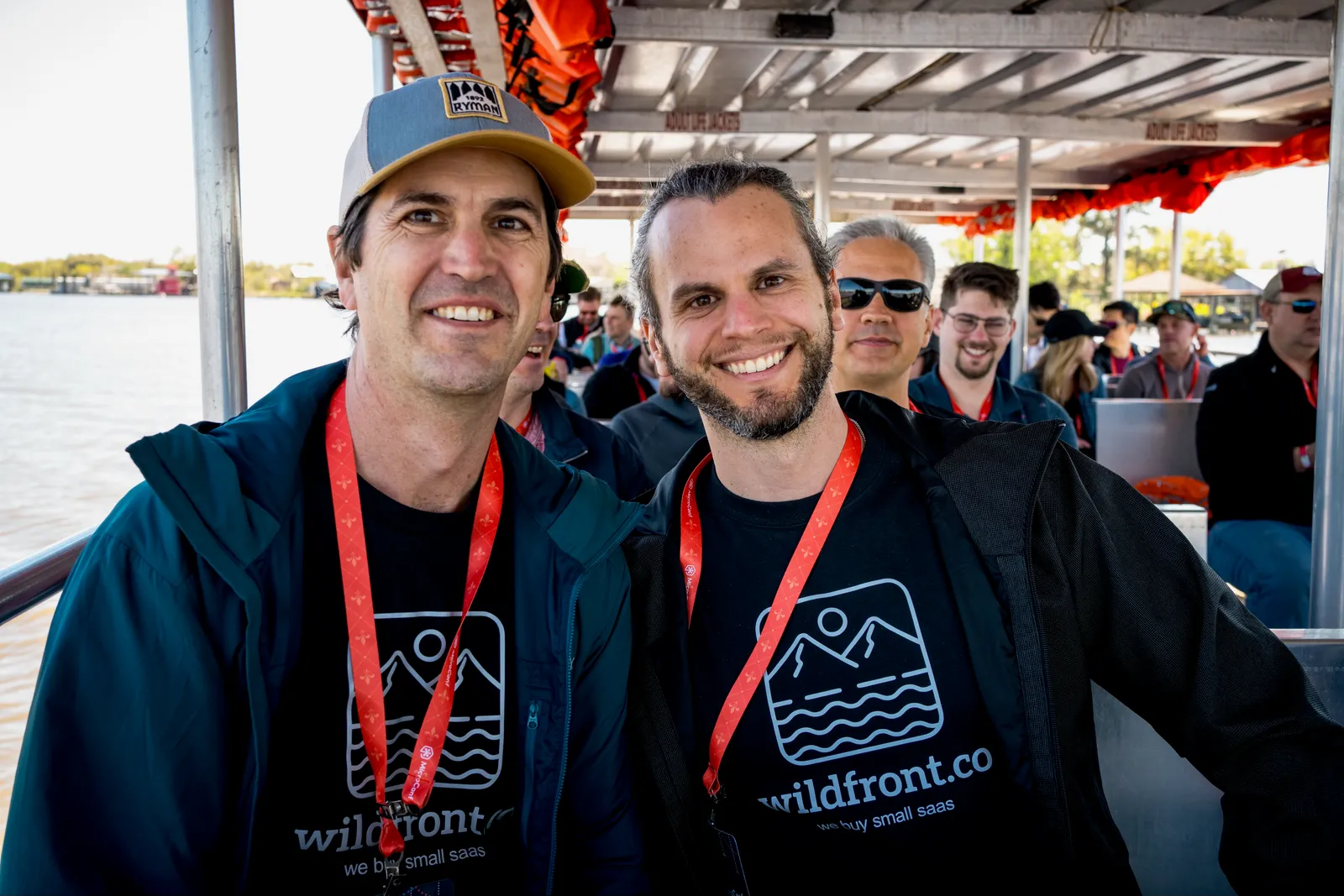
Don't skip the excursions! This was a super fun alligator tour in New Orleans. We saw tons of gators. They were cool.
After the conference:
- Follow up within a week. Send personalized emails to the people you connected with. Reference something specific from your conversation.
- Actually implement something you learned. Don't let this be one of those conferences where you take a bunch of notes and never act on them. Pick 1-2 actionable insights and test them in your business.
- Stay active in the community. The MicroConf Slack and the broader bootstrap community on Twitter are ways to stay connected between events. Many bootstrapped founders also like spending time in the Wildfront Community, which we host and is full of awesome tech founders who are bootstrapping their companies.
- Consider starting or joining a mastermind. Many attendees form ongoing mastermind groups that meet monthly or quarterly. This can be one of the highest-leverage outcomes from attending.
Common first-timer mistakes to avoid:
- Staying in your hotel room during breaks (you're paying thousands of dollars to be there—be present)
- Only talking to speakers and "famous" founders (some of the best conversations are with people you've never heard of)
- Treating it like a pitch fest (nobody wants to hear your sales pitch; they want to have a real conversation)
- Not following up after the event (the value is in the ongoing relationships, not just the three days)
- Comparing yourself to others (someone will always be further ahead; focus on learning, not comparing)
Should You Attend?
After 7+ combined MicroConfs between us, here's our honest take on who should (and shouldn't) attend.
You should definitely attend if:
- You're actively running a bootstrapped or mostly-bootstrapped SaaS business generating revenue
- You're at a stage where tactical, operational knowledge would help you grow (not just early ideation)
- You value learning from real experiences over theoretical advice
- You're open to being vulnerable about your challenges and having honest conversations
- You can afford the $3K-5K investment without it materially impacting your business
- You're willing to put in the effort to make connections (MicroConf rewards those who engage, not passive attendees)
You might want to skip it if:
- You're pre-revenue or in very early ideation (the content will be too advanced, and the money is better spent on shipping product)
- You're raising VC and chasing hyper-growth (the bootstrap/sustainable growth philosophy might not align with your path)
- You're looking for a silver bullet or get-rich-quick scheme (MicroConf is about sustainable, long-term building)
- You're not willing to be open about your business (the value comes from transparency; if you're secretive, you won't get as much out of it)
- You can't afford it without stressing about the cost (there are free or cheaper alternatives to learn from the bootstrap community)
Alternative options if you're not ready for MicroConf:
- Join Wildfront+, our paid mastermind and community for bootstrapped SaaS founders, for accountability and peer feedback between events
- Attend smaller, local meetups for SaaS or bootstrap founders in your city
- Join online mastermind groups (many form through Twitter, Reddit, or other communities)
- Read blogs and case studies from bootstrap founders (MicroConf talks are often published on YouTube months after the event)
Our verdict: If you're at $50K+ ARR and building a bootstrap or mostly-bootstrap SaaS, MicroConf is one of the highest-ROI investments you can make. The tactical knowledge, strategic insights, and relationships you build will compound for years.
That said, it's not magic. You'll get out what you put in. If you show up, attend talks, and leave without talking to anyone, you've wasted your money. But if you engage with the community, have real conversations, and follow up afterward, you'll walk away with insights and connections that can materially change your business trajectory.
Conclusion
We keep coming back to MicroConf year after year because it delivers something rare: a community of operators who are in the trenches building real, sustainable software businesses. No hype, no BS, just founders helping each other build better companies.
The talks are good. The venue is nice. The swag is... fine. But none of that is why we go. We go for the conversations in the hallway, the late-night discussions over drinks, the introductions to people who become long-term friends and collaborators. We go because being around other bootstrap founders reminds us why we're doing this and gives us energy to keep building.
Is MicroConf perfect? No. Some talks are better than others. Some editions have better attendee energy than others. The coffee could be better (sorry, Rob). But even the "worst" MicroConf we've attended was valuable enough that we'd do it again.
If you're on the fence about attending, here's our advice: go once. Give it your full effort—show up early, stay late, talk to people, ask questions, be vulnerable about your challenges. If you do that and still don't think it was worth it, then it's probably not for you. But we'd bet that after one event, you'll understand why so many of us keep coming back.
We'll see you in Portland or Iceland in 2026. Come say hi.
For more resources on growing and scaling your SaaS, check out our SaaS Growth Strategy Guide, and if you're ever thinking about selling your business, our founder-friendly acquisition process might be worth a look.
- Alex & Mac
Join a room of bootstrapped SaaS founders
Wildfront+ is an invite-only mastermind of vetted SaaS and app founders. With professionally facilitated calls, honest feedback, real connection, and peer support. Not ready to apply? Start free with the bootstrapper academy.