

Growth strategy
The Complete SaaS Growth Strategy Guide: Real Case Studies from 0 to 7-Figure MRR
Tired of generic SaaS growth advice that doesn't include real numbers or outcomes? This guide shares battle-tested strategies with actual case studies from companies that grew to 91k MRR, 30k MRR, and beyond—with the exact tactics, timelines, and lessons learned along the way.
 By Alex Boyd
Most SaaS growth articles give you the same recycled advice: "do content marketing," "optimize your funnel," "focus on retention." But they rarely show you what actually works, with real numbers, from real companies.
This guide is different.
Over the past decade, I've founded and grown multiple SaaS companies using different growth strategies. Some worked incredibly well. Others... not so much. In this article, I'm sharing three detailed case studies with actual revenue numbers, timelines, and tactical details—so you can learn from what worked (and what didn't) without having to figure it all out yourself.
What you'll learn:
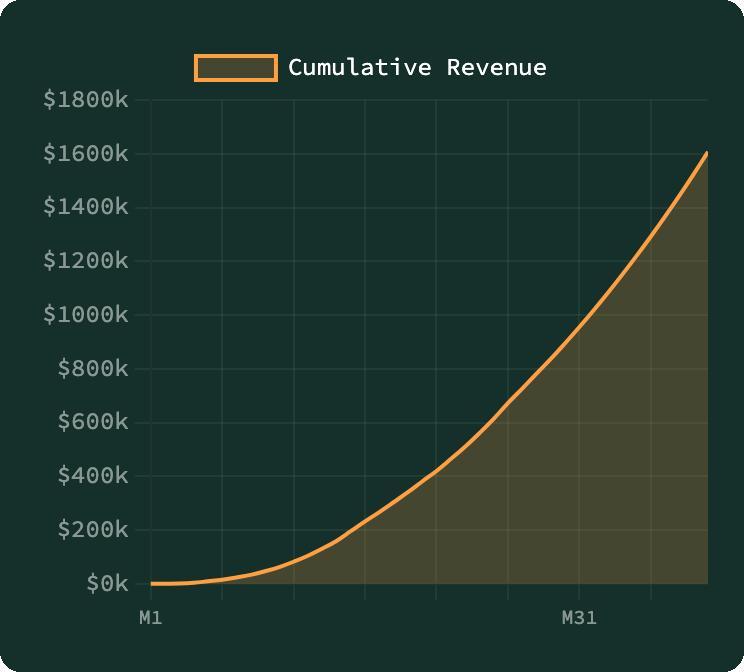
- How Castanet grew to 91k MRR in 40 months using LinkedIn outbound and a reseller channel strategy
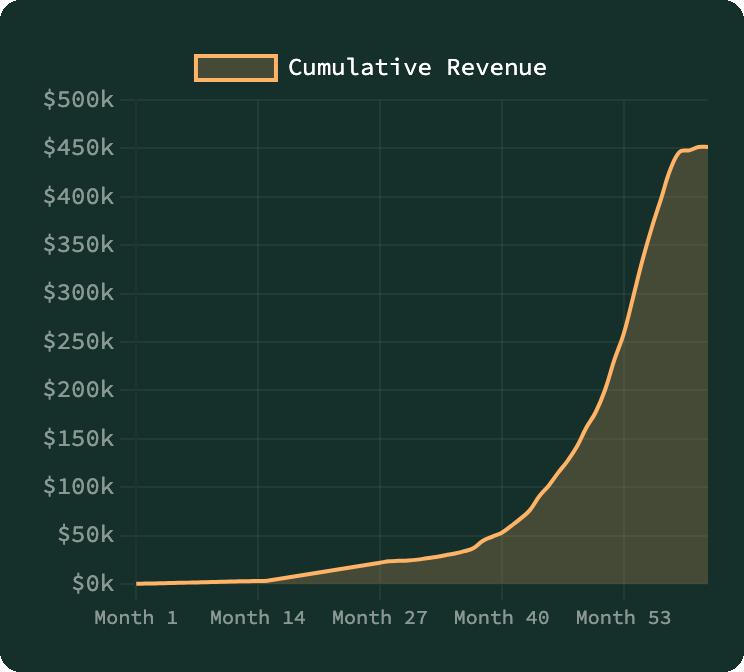
- How Aware reached 30k MRR through LinkedIn brand building and influencer marketing
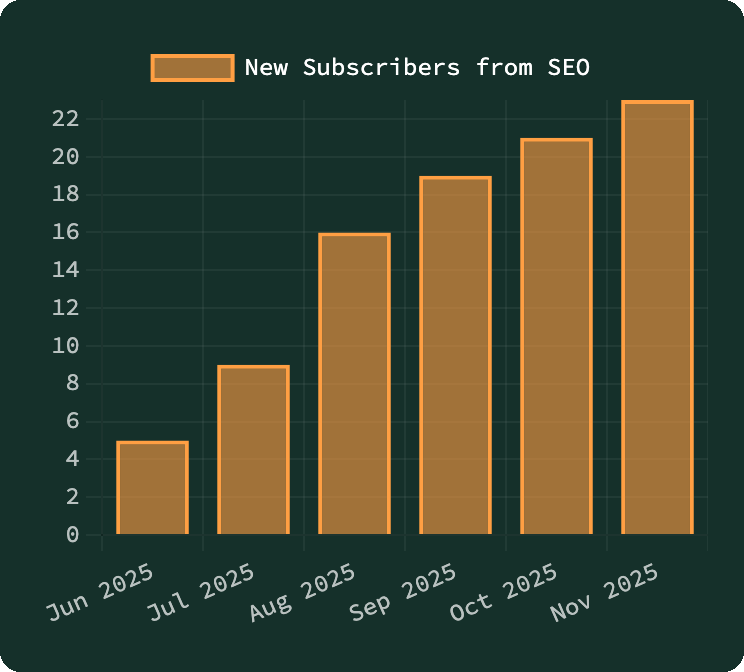
- How ViewExport acquired 25 new SaaS subscribers in 5 months purely through organic search
- Which strategies work best at different stages (0-10k, 10k-100k, 100k+ MRR)
- My contrarian take on why you should build organic first, then scale with paid
What Makes SaaS Growth Different
Before we dive into specific strategies, let's talk about what makes growing a SaaS business fundamentally different from other business models.
Recurring revenue changes everything. Unlike traditional businesses where you close a deal and move on, SaaS companies live and die by retention. A customer who pays you $100/month for three years is worth $3,600—but only if you can keep them. This means your growth strategy can't just focus on acquisition; it needs to account for the entire customer lifecycle.
The sales cycle is longer. Especially for B2B SaaS, buyers don't typically purchase on the first touch. They need to see your content, understand your positioning, try your product (or see a demo), and get internal buy-in. This means you need multiple touchpoints across different channels—and the discipline to nurture leads over weeks or months.
Product-led growth opportunities. Unlike services businesses, SaaS products can demonstrate their value directly. Free trials, freemium models, and interactive demos allow prospects to experience your solution before they buy. This changes how you think about marketing and sales.
But here's what most people miss: Community is the hidden multiplier.
Every successful SaaS growth strategy I've seen has one thing in common—it's built on relationships. Whether you're doing outbound, SEO, social selling, or partnerships, the companies that win are the ones that invest in community. That means building ecosystem relationships, supporting people in your industry, and helping others succeed—whether or not they become direct customers or revenue-sharing partners.
Yes, use AI to scale back-end processes and improve efficiency. But you can't forget to shake hands and support people the old-fashioned way. In a world where everyone is automating everything, genuine relationships become your competitive advantage.
The Foundation: Build Organic Before You Scale Paid
Here's my most contrarian take on SaaS growth:
Most companies over-invest in paid acquisition too early.
I see it constantly: early-stage SaaS companies burning through cash on Google Ads and LinkedIn Ads before they've built any organic foundation. They haven't proven product-market fit, they don't have clear messaging, and their conversion funnel is held together with duct tape—but they're spending thousands per month on ads because "that's what you're supposed to do."
Here's what actually works:
- Start with organic channels first. SEO, content marketing, social selling, community building, and partnerships. These channels force you to get your messaging right, understand your customer deeply, and prove that people actually want what you're selling.
- Once those are working, use paid to accelerate. Paid acquisition should amplify what's already working—not be your primary growth engine from day one.
- Know yourself, then pick channel-product fit intentionally. If you love sending 10,000 cold emails a day, get good at outbound and build products that can be marketed through outbound. If you hate that and prefer building inbound lead-generating machines, do that instead—and choose products that are naturally marketed through inbound.
Think of it like building a fire. Organic channels are your kindling and logs—they take time to ignite, but once they're burning, they sustain themselves. Paid acquisition is gasoline. Pour it on too early, and you just waste money. Wait until you have a solid fire going, then use it strategically to make that fire bigger.
Organic First, Then Paid — What the Growth Curve Actually Looks Like
MRR over 18 months · Paid added only after organic is working
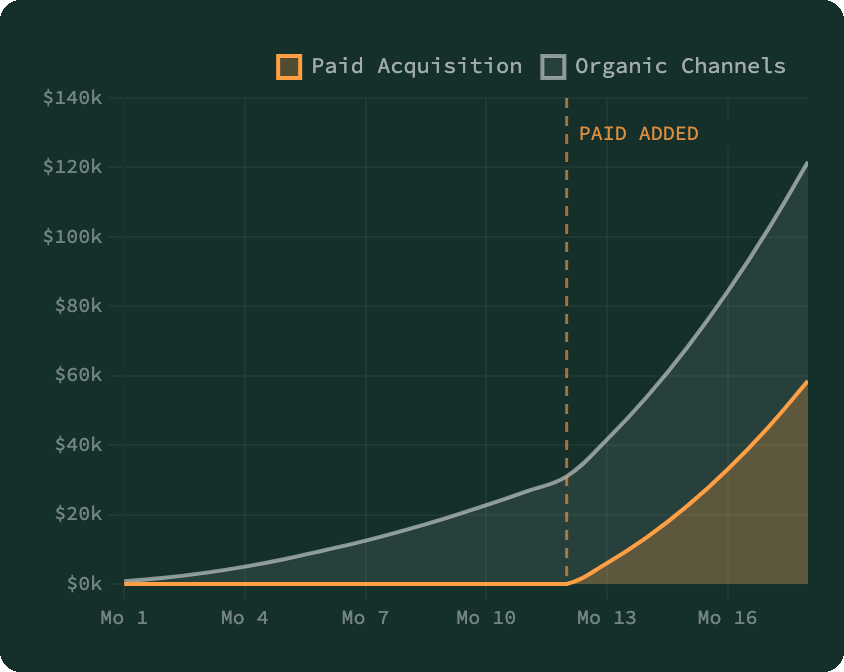
This approach has three major benefits:
- It's capital efficient. You're not burning cash before you've proven that your acquisition → activation → retention → revenue model actually works.
- It forces you to get good at messaging. You can't just throw money at the problem; you have to create content and positioning that actually resonates.
- It builds long-term assets. SEO content, social media followings, community relationships, and partnerships compound over time. Paid ads stop working the moment you stop paying.
Now let's look at specific channels—with real case studies showing exactly how they work.
1. SEO & Content Marketing: The Long-Term Growth Engine
SEO is the ultimate compounding growth channel for SaaS. Unlike paid ads, where you stop getting traffic the moment you stop paying, organic search traffic can grow month over month—even if you're not publishing new content.
But here's the catch: most SaaS companies do SEO wrong.
They create generic "What is [category]" blog posts that target high-volume keywords, but those posts don't convert because the searchers aren't ready to buy. Or they create bottom-of-funnel comparison pages, but Google doesn't rank them because they don't have topical authority.
The strategy that actually works combines three layers:
- Bottom-of-funnel solution pages focused on the "job the customer is trying to do" (not just your product category)
- Middle and top-of-funnel content to build topical authority and capture earlier-stage searches
- Strategic link building pointing to your conversion pages (not just your homepage)
Case Study: ViewExport's SEO Strategy
Result: 25 new SaaS subscribers in 5 months purely from organic search
The Challenge
ViewExport is a data export tool for SaaS platforms. The challenge was that most people don't search for "data export tool"—they search for solutions to specific problems like "how to export Salesforce data to Excel" or "bulk export HubSpot contacts."
The Strategy
Rather than targeting generic category keywords, we focused on creating solution-oriented pages that matched what people were actually searching for—the jobs they were trying to get done.
We built:
- Bottom-of-funnel solution pages: "Export [Platform] Data to [Format]" targeting high-intent searchers who needed our exact solution
- Use case pages: Industry-specific and role-specific content showing how different teams use data exports
- Tutorial content: How-to guides that ranked for educational queries and built topical authority
- External link building: We focused on getting links to our conversion pages (not just the homepage) from relevant industry sites and tools directories
The Results
Within 5 months, ViewExport acquired 25 new paying subscribers directly from organic search. More importantly, these were high-quality leads with strong intent—because they were searching for the exact solution we provided.
ViewExport: New Subscriber Acquisition via Organic Search
Monthly new subscribers from SEO over 5 months
Key Takeaways
- Target the job to be done, not just your product category
- Build topical authority with supporting content before expecting bottom-of-funnel pages to rank
- Get links to your conversion pages, not just your homepage
- Be patient—SEO takes 3-6 months to gain traction, but compounds from there
When SEO Works Best
Ideal for: 10k-100k MRR stage
SEO works best when you've already validated product-market fit and have some resources to invest in content creation. It's a medium to long-term play (3-12 months to see meaningful results), so it's less effective for early-stage companies that need immediate traction.
Benefits: Compounds over time, high-quality leads with strong intent, capital efficient, builds long-term assets
Risks: Slow to start, requires consistent effort, algorithm changes can impact rankings, competitive in popular niches
2. Outbound Sales (When Done Right): Fast Validation and Revenue
Outbound sales gets a bad rap—and for good reason. Most outbound is terrible. Generic "spray and pray" emails that nobody reads. Automated LinkedIn connection requests with immediate pitches. Cold calls from SDRs reading scripts. If you're evaluating whether to hire internally or use a vendor, our breakdown of the best outsourced sales companies covers what to look for and what to avoid.
But when done right, outbound can be one of the fastest ways to validate product-market fit and generate early revenue.
The key is to move away from mass automation and toward micro-campaigns designed to test message-market fit. Instead of blasting 10,000 generic emails, send 50 highly personalized messages to see what resonates. Then iterate and scale what works. Building a tight, well-filtered prospect list is step one—Apollo is what most founders use for this, given the depth of its B2B contact data and the ability to filter by role, company size, industry, and tech stack.
Here's a case study showing how this approach helped one SaaS company grow to 91k MRR.
Case Study: Castanet's LinkedIn Outbound to Reseller Channel Strategy
Result: 91k MRR in 40 months, leading to a successful exit
The Challenge
Castanet (name anonymized) was an early-stage B2B SaaS product targeting a specific professional niche. The founder needed to validate product-market fit and generate revenue quickly—but had limited resources for paid acquisition.
Phase 1: Personalized LinkedIn Outbound (Months 1-12)
The initial strategy was simple but effective: LinkedIn outbound direct messages offering demo calls, with a unique personalization twist.
Instead of generic text-based messages, the founder created personalized videos using AI to scale the personal touch. Each video started with the founder saying "Hey [FirstName]!" on camera—manually recorded for each prospect—followed by a pre-recorded demo video. This created the feeling of a personalized message while still being scalable.
The approach felt significantly better than standard outreach (though we don't have exact conversion metrics). More importantly, it led to high-quality conversations and early customers who provided valuable product feedback.
Phase 2: The Pivot to Reseller Channels (Months 13-40)
Here's where the strategy got interesting—and where the real growth happened.
The founder realized that some of the people responding to outbound weren't ideal end-customers, but they knew a lot of ideal customers. So instead of just focusing on direct sales, the outbound strategy evolved to identify potential resellers of the software.
The offer was simple: a white-label revenue share deal with great service and support. Resellers loved it because:
- They could offer a valuable tool to their own clients and networks
- The revenue share was generous
- The founder provided exceptional support, making them look good
The result? Fewer than 6 resellers drove over 90% of net new revenue at peak performance.
The founder essentially stepped back from having to do direct sales and let the resellers handle it. This fast growth led to a healthy, quick exit. (If you're interested in selling your SaaS business, check out our guide to the best SaaS acquirers.)
Castanet: Growth to 91k MRR Through Outbound + Reseller Strategy
Cumulative revenue over 40 months
Key Takeaways
- Personalization matters—even at scale. The AI-powered video approach made outreach feel genuine.
- Don't just think about direct customers. Some of your best growth opportunities might be partnerships or reseller channels.
- A few high-performing partners can dramatically outperform your own sales efforts—if you support them well.
- Outbound is great for testing message-market fit quickly, then evolving your strategy based on what you learn.
When Outbound Works Best
Ideal for: Any stage for initial experimentation, then 25k+ ACV companies
Outbound is excellent for early-stage validation at any revenue level—it's one of the fastest ways to test message-market fit and get direct customer feedback. However, after the initial experimentation phase, outbound becomes less beneficial for most companies unless you have an average contract value (ACV) of $25,000+ per year. The economics simply don't work for lower-priced SaaS without high contract values to support the effort required.
Benefits: Fast feedback, works before you have brand awareness, tests message-market fit, direct conversation with prospects
Risks: Doesn't scale well without automation (which often hurts quality), can damage brand if done poorly, requires ongoing effort, economics don't work for low ACV products
3. Social Selling & Founder-Led Marketing: Building a Personal Brand That Drives Revenue
Here's a truth that most SaaS founders don't want to hear: In the early stages, your personal brand matters more than your company brand.
When you're a small, unknown SaaS company, people don't trust your company—they trust you. If you've been creating valuable content on LinkedIn, sharing insights, helping people solve problems, and building genuine relationships, you've built credibility. And that credibility translates directly into revenue.
Social selling isn't about posting LinkedIn content and hoping people buy. It's about:
- Creating content that demonstrates expertise and positions you as a trusted voice in your space
- Engaging authentically with your audience and peers to build relationships
- Taking conversations offline when there's a fit
(Want to learn the complete system? Check out our free 7-Figure Social Selling course that breaks down exactly how to do this in less than 20 minutes per day.)
LinkedIn is particularly powerful for B2B SaaS because it's a relatively stable platform (compared to Twitter/X or other social networks) where your ideal customers are already spending time.
But there's another layer to this: influencer marketing and partnerships with other creators. This is one of the most underrated growth channels for SaaS—and one that most founders start way too late.
Case Study: Aware's LinkedIn + Influencer Marketing Strategy
Result: 30k MRR through LinkedIn brand building and influencer partnerships
The Challenge
Aware is a LinkedIn productivity and engagement tool designed for B2B professionals, founders, and creators who want to grow their presence on LinkedIn without spending hours every day. The challenge was reaching the right audience in a crowded market of social media tools.
Phase 1: Founder-Led LinkedIn Brand Building
The foundation of Aware's growth was my own LinkedIn presence. Over the years, I'd built a following by sharing insights on B2B marketing, social selling, and SaaS growth—backed by real experience from growing and exiting previous companies.
This personal brand became the primary acquisition channel for Aware. Posting 3-4 times per week, engaging with others' content, and having genuine conversations led to inbound interest from the exact type of customers Aware was built for.
The content wasn't promotional—it was educational. I shared what worked (and what didn't) in my own businesses, gave tactical advice, and built relationships. People reached out because they knew I understood their challenges.
Phase 2: The Influencer Marketing Pivot (The Lesson I Learned Too Late)
Here's the big lesson: I should have started influencer marketing at day 90, not day 1000.
When I finally started partnering with influencers and creators in the LinkedIn/B2B/SaaS space, the results were dramatic. In a 3-month period, content marketing and creator partnerships drove 340 new free trials.
What worked:
- Micro-influencers and thought leaders: We partnered with a mix of smaller creators (5k-50k followers) with high engagement, and respected industry voices in SaaS, marketing, and sales
- Flexible compensation models: We paid $35-65 per 1,000 impressions as a baseline, but offered either fixed fees or hybrid fixed/commission models depending on what each influencer preferred
- The 10/90 rule: Like most affiliate or partnership programs, 10% of our influencers drove 90% of the revenue—and within that 10%, there were 2-4 highly effective partners out of 10-15 total performers
The key insight? Influencers talking about your product is often the content that drives the most customer acquisition—more than your own product tutorials or feature announcements.
Aware: Growth to 30k MRR via LinkedIn + Influencer Marketing
Cumulative revenue growth timeline
Key Takeaways
- Your personal brand as a founder can be your most powerful acquisition channel—especially for B2B SaaS
- Start influencer marketing much earlier than you think. Day 90, not day 1000.
- Offer flexible partnership models—some influencers want fixed fees, others want commission-based deals
- Expect the 10/90 rule—and focus on supporting your top performers
- Content about your product from trusted voices converts better than your own promotional content
When Social Selling & Influencer Marketing Work Best
Ideal for: 0-100k MRR, especially founder-led B2B SaaS
Social selling and influencer marketing are most effective for early to mid-stage SaaS companies where the founder's voice and credibility matter. This strategy works particularly well if you're selling to a specific professional niche (marketers, salespeople, founders, etc.) who are active on platforms like LinkedIn.
Benefits: Builds long-term brand equity, creates inbound demand, establishes category authority, compounds over time
Risks: Requires consistent content creation, takes time to build momentum, founder-dependent (can be hard to scale beyond the founder's brand)
4. Partnerships & Reseller Channels: Leveraging Other People's Audiences
One of the most underrated SaaS growth strategies is building a partner or reseller ecosystem—letting others sell your product for you.
This is what took Castanet from steady growth to exponential growth. By offering white-label deals and revenue share partnerships to the right people, the company turned fewer than 6 resellers into a channel that drove over 90% of net new revenue.
Why partnerships work so well for SaaS:
- Instant access to established audiences. Your partners already have trust and distribution with your ideal customers.
- Lower CAC. You're typically paying a revenue share (only when you make money) rather than upfront acquisition costs.
- Built-in credibility. When a trusted advisor or partner recommends your tool, it carries more weight than your own marketing.
How to build a successful partner channel:
- Identify who already serves your ideal customers. Consultants, agencies, complementary SaaS tools, industry influencers, or professional communities.
- Make the offer compelling. Generous revenue share, white-label options, co-marketing opportunities, or affiliate commissions—whatever makes it worth their while.
- Provide exceptional support. Your partners are representing you to their audience. Make them look good by being responsive, helpful, and easy to work with.
- Focus on your top performers. Like Castanet, you'll likely find that a small number of partners drive the majority of results. Double down on supporting them.
When Partnerships Work Best
Ideal for: 10k-100k+ MRR
Partnership and reseller channels work best once you've proven product-market fit and have some success stories to share. Partners want to recommend products they trust—so having an established track record makes recruitment easier.
Benefits: Scalable without proportional cost increases, leverages existing trust and distribution, lower CAC than most channels
Risks: Requires partner management and support, revenue share reduces margins, partner quality varies widely
5. Community Building: The Thread That Connects Everything
I mentioned this earlier, but it's worth revisiting because it's so important:
Community is what ties all of these growth strategies together.
Whether you're doing SEO, outbound, social selling, or partnerships—the companies that win are the ones that invest in relationships. Not just transactional "let me sell you something" relationships, but genuine support for people in your ecosystem.
(That's why we built the Wildfront Community—a place for SaaS founders and operators to share insights, get feedback, and support each other's growth.)
This means:
- Engaging with others' content on social media (not just posting your own)
- Making introductions and helping people connect
- Sharing insights and lessons learned, even when there's no immediate business benefit
- Showing up to industry events, webinars, and conversations
- Supporting people whether or not they become customers or partners
Yes, use AI and automation to handle the back-end operational stuff. But don't automate the human parts. In a world where everyone is trying to scale everything with software, genuine human relationships become your competitive advantage.
Community isn't a growth channel you can measure with clean attribution. But it's the foundation that makes everything else work better.
When Community Building Works Best
Ideal for: All stages, but especially 10k+ MRR
Community building should start early, but it becomes particularly powerful once you have customers who can become advocates and once you have enough resources to invest in relationship-building without immediate ROI pressure.
Benefits: Long-term brand equity, organic word-of-mouth, partner and customer retention, ecosystem support
Risks: Hard to measure, requires ongoing time investment, doesn't generate immediate revenue
The Real Growth Lever: Retention
Here's one more contrarian take: Retention is where real SaaS growth happens, not acquisition.
Most founders obsess over getting more customers. But if you're losing customers as fast as you're acquiring them, you're just running on a treadmill.
The compounding effect over time is stark. Assume you're acquiring 15–35 new customers a month at $99 MRR. Here's what your growth curve looks like at 3% monthly churn vs. 35% monthly churn:
3% vs 35% Monthly Churn: The 24-Month Divergence
$99 ASP · 15–35 new customers/month · same acquisition, completely different outcomes
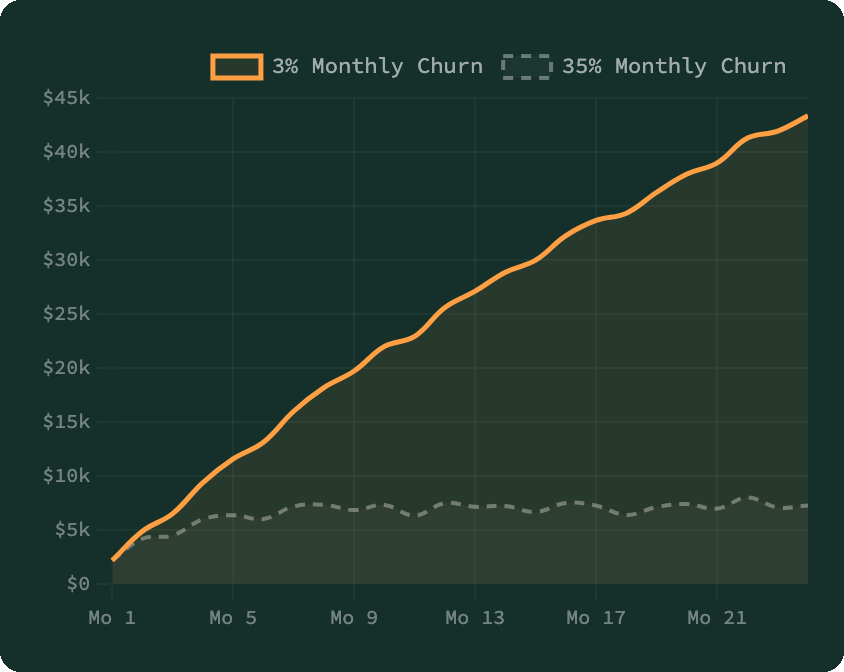
High retention means every new customer you acquire stays longer, pays more over their lifetime, and is more likely to refer others.
Before you scale acquisition, make sure your retention is solid.
This means:
- Obsess over product quality. The best retention strategy is building something people actually want to keep using.
- Nail your onboarding. Most churn happens in the first 30-90 days. If customers don't reach their "aha moment" quickly, they'll leave.
- Invest in customer success. Proactive outreach, check-ins, and support can prevent churn before it happens.
- Measure and optimize. Track cohort retention, understand why customers churn, and fix the root causes—don't just accept churn as inevitable.
A 5% improvement in retention can have a bigger impact on revenue than a 20% improvement in acquisition. Focus there first. To track churn, MRR, and net income in one place, grab our free SaaS financial model template—it's built around these exact metrics.
Stage-Based Strategy Recommendations
Different growth strategies work better at different stages. Here's a quick guide:
Conclusion: Start With One, Master It, Then Expand
The biggest mistake I see SaaS founders make is trying to do everything at once. They're running Google Ads, posting on LinkedIn, building an SEO content library, attending conferences, launching a partner program, and doing outbound—all at the same time.
They end up doing all of it poorly instead of one thing well.
Here's what actually works:
- Pick one channel that aligns with your stage and strengths. If you're good at writing and have time, start with SEO or LinkedIn. If you need fast validation, try outbound. If you have an existing network, leverage partnerships.
- Go deep on that one channel until it's working consistently. Don't move on until you've figured out what good looks like.
- Then add a second channel to diversify. Once you have one reliable source of growth, add another to reduce risk and increase volume.
- Build organic foundations before scaling with paid. Prove your messaging, positioning, and conversion funnel work organically—then use paid to pour gasoline on the fire.
- Never forget that community and relationships are what tie it all together. Support people, shake hands, build genuine connections. That's the foundation everything else is built on.
SaaS growth isn't about hacks or shortcuts. It's about picking the right strategies for your stage, executing them well, and building genuine relationships along the way.
Start with one. Master it. Then grow from there.
Want to connect with other SaaS founders growing their businesses? Join the Wildfront Community where we share insights, tactics, and support each other through the challenges of building and scaling SaaS companies. You'll get access to exclusive case studies, growth teardowns, and direct conversations with founders who've been there.
You can also check out our free resources including the 7-Figure Social Selling course, or join our newsletter for regular insights on SaaS growth, acquisitions, and building profitable businesses.
Considering buying a SaaS instead of building from scratch? Our complete guide to buying a SaaS business covers due diligence, deal structuring, and post-acquisition growth strategies to help you skip the 0-to-1 phase.
-Alex
Join a room of bootstrapped SaaS founders
Wildfront+ is an invite-only mastermind of vetted founders — professionally facilitated calls, honest feedback, no fluff. Or start free with the bootstrapper academy.